Research
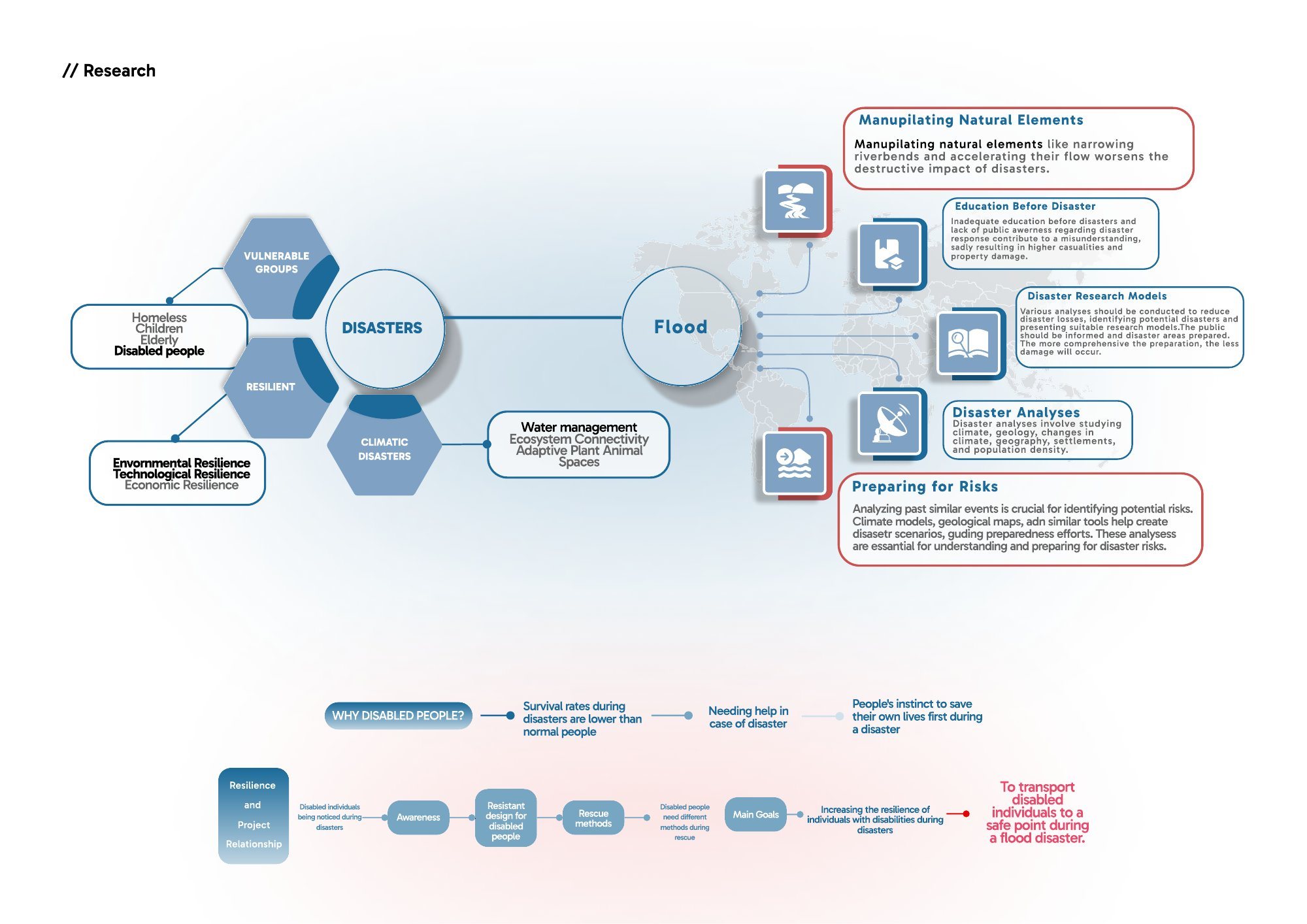
Research into disaster models, climate data and the manipulation of natural elements showed that disabled people are among those with the lowest survival rates in disasters, and the most in need of help.
User Research
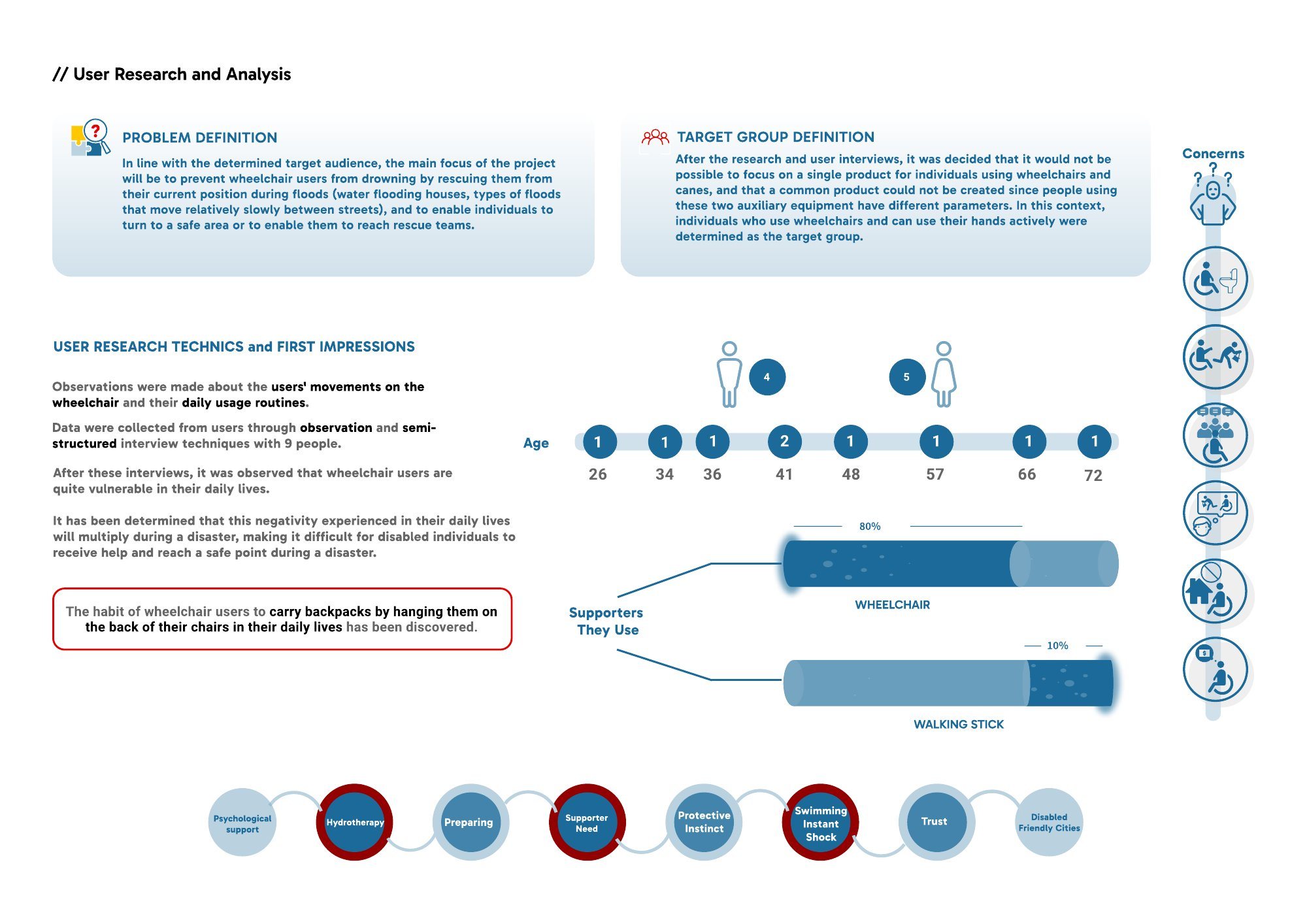
Observation and semi-structured interviews were held with 9 users. Because wheelchair and cane users have different parameters, wheelchair users who can actively use their hands became the target group. The problem: prevent them from drowning in slow floods and help them reach a safe area or rescue teams.
Ideation
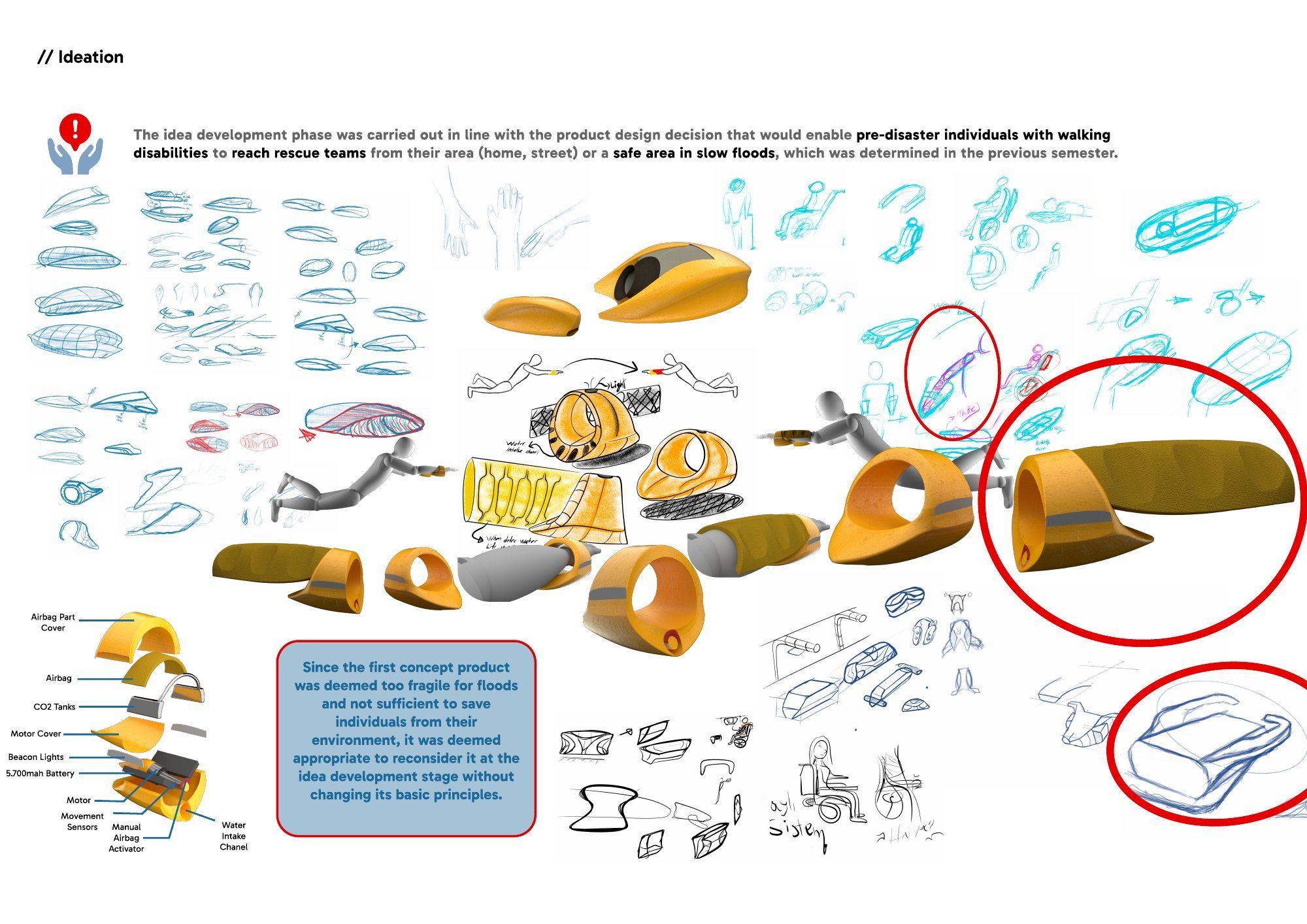
The first concept was judged too fragile for floods and not enough to rescue users from where they were, so it was reworked at ideation while keeping its core principles.
Stakeholder Support and Prototype Tests
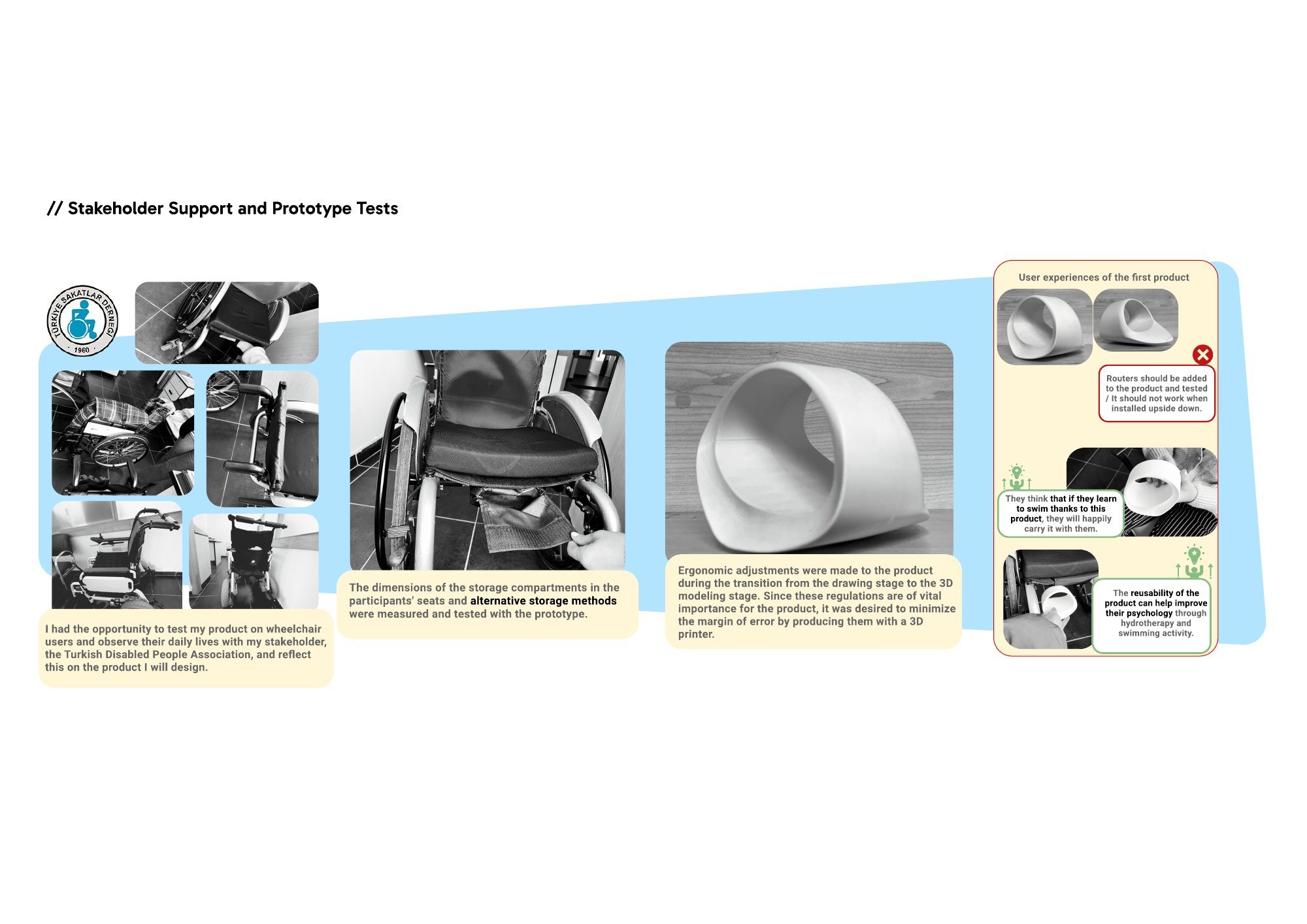
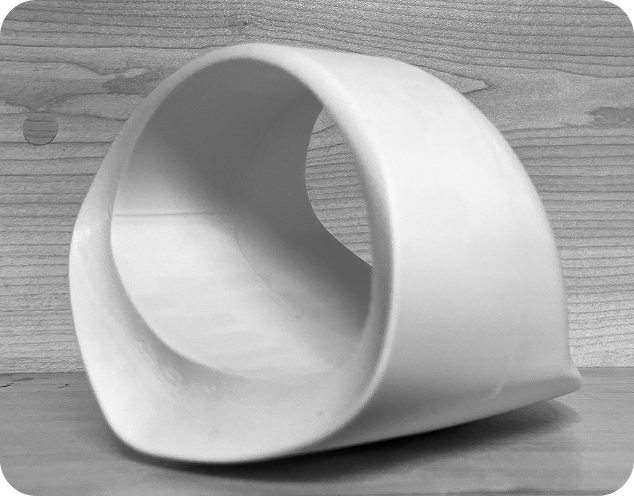
With my stakeholder, the Turkish Disabled People Association, I was able to test the product with wheelchair users and observe their daily lives. Ergonomic adjustments were made between drawing and 3D modeling; these vital parts were 3D printed and tested to minimise the margin of error. Storage compartments on the seats and alternative ways of carrying were also measured and tested with the prototype.
Product and Details
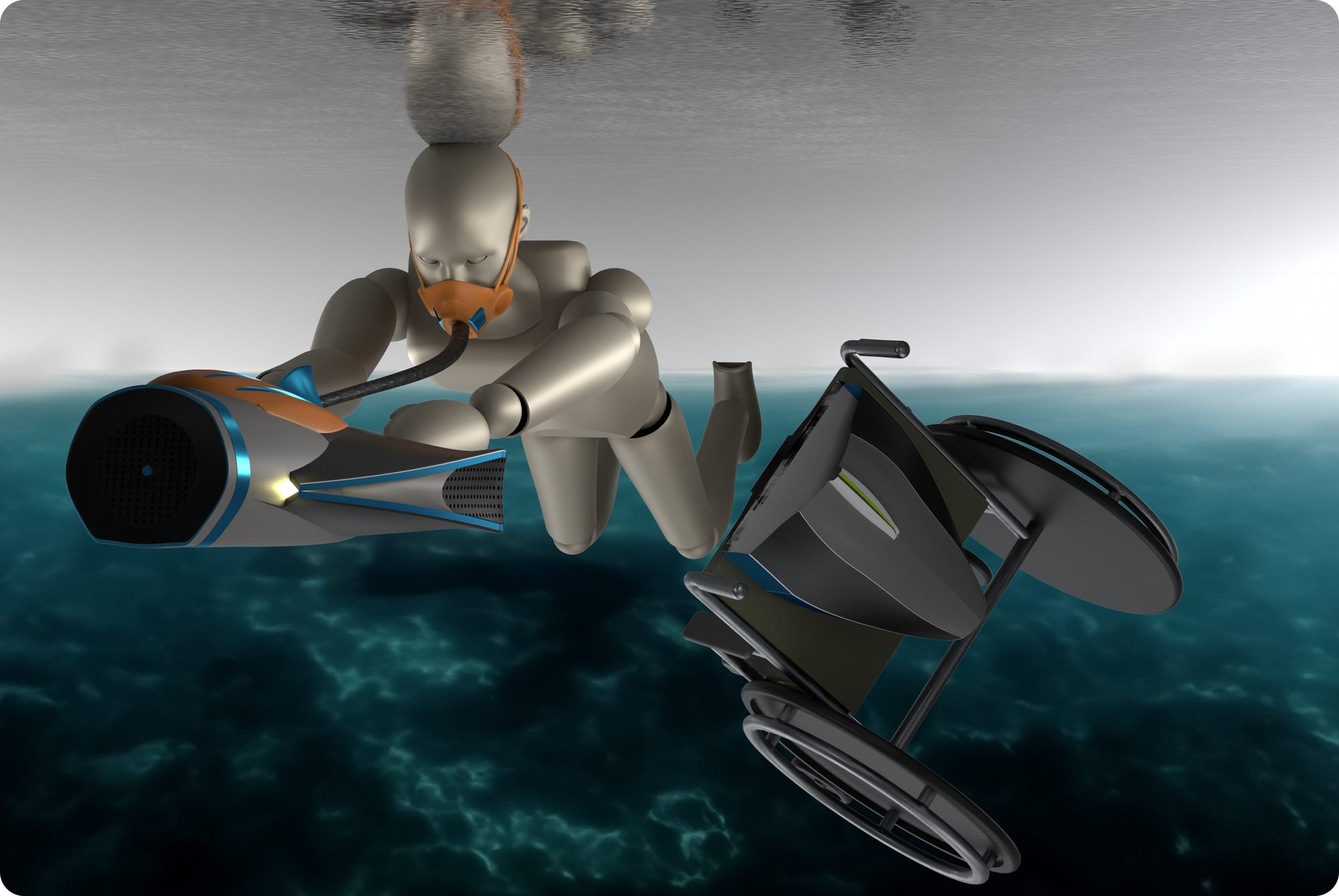
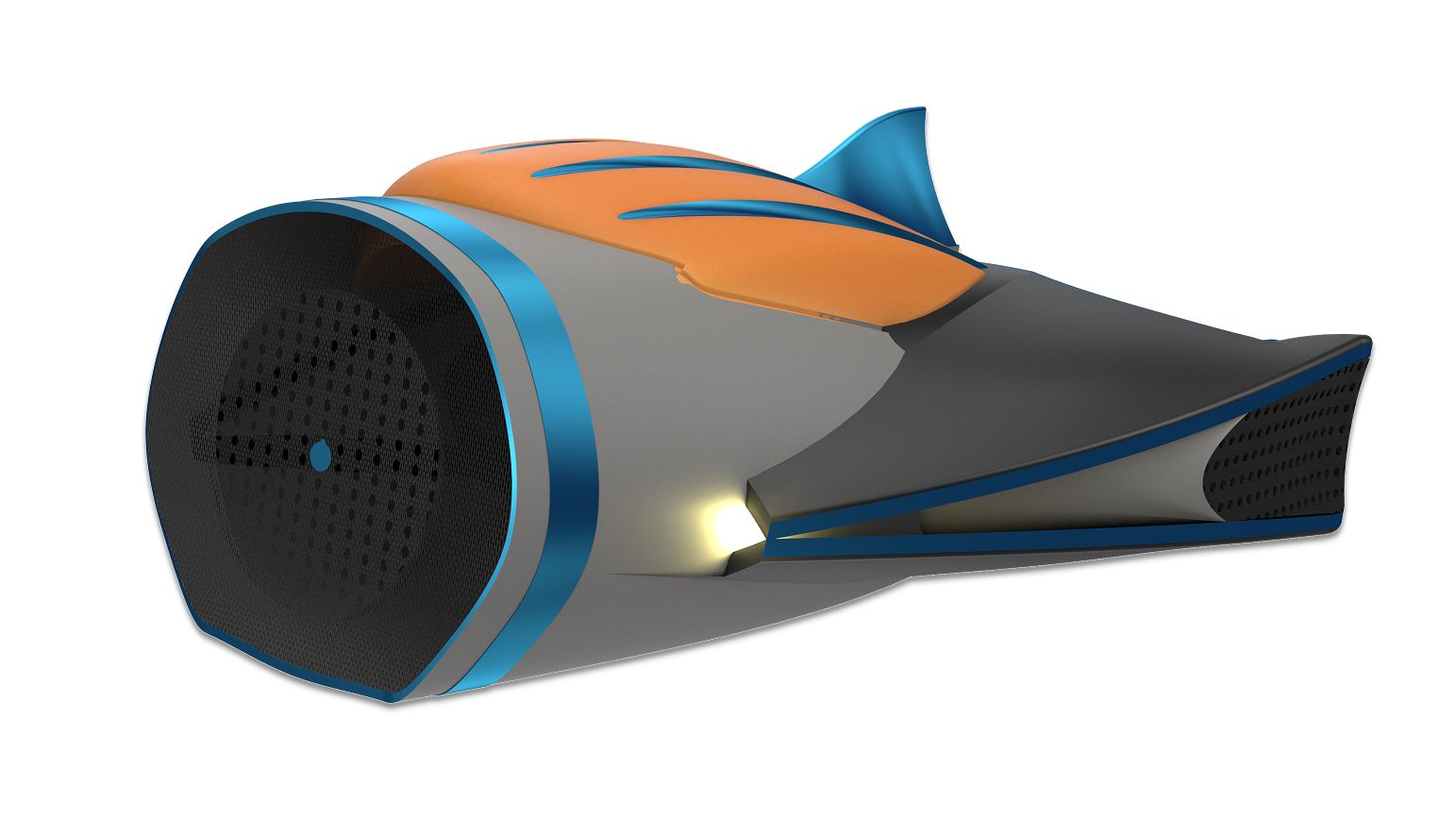
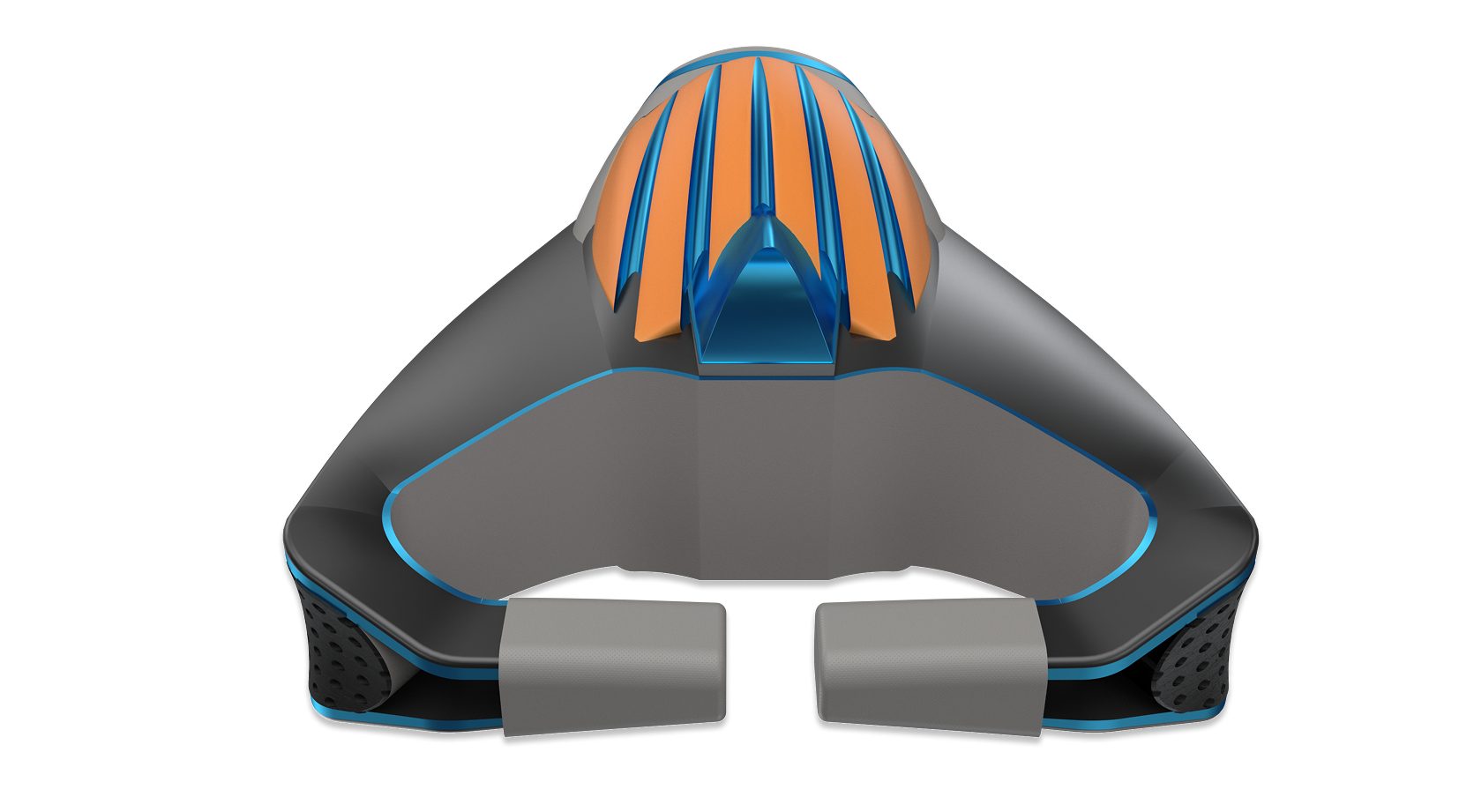
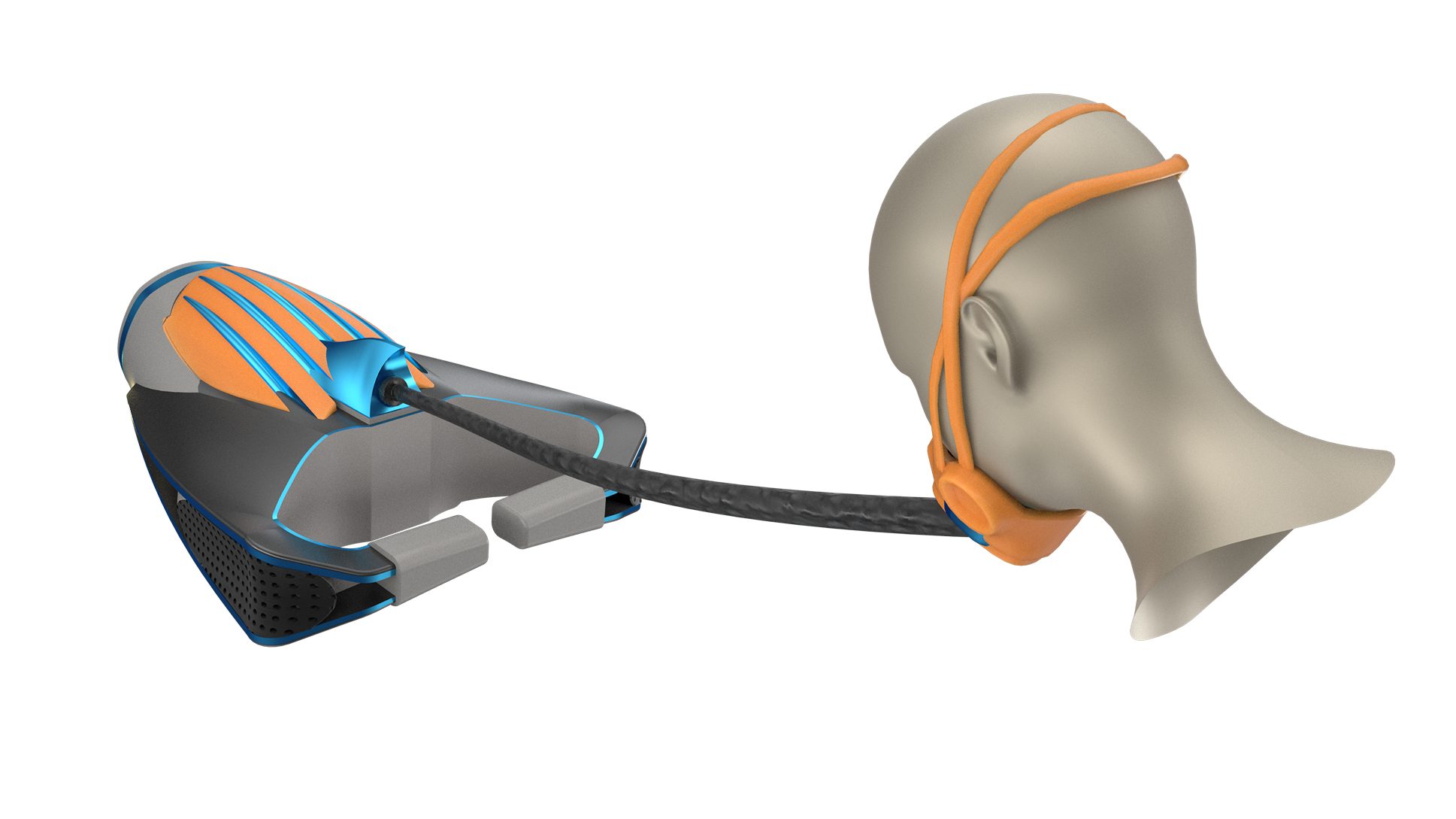
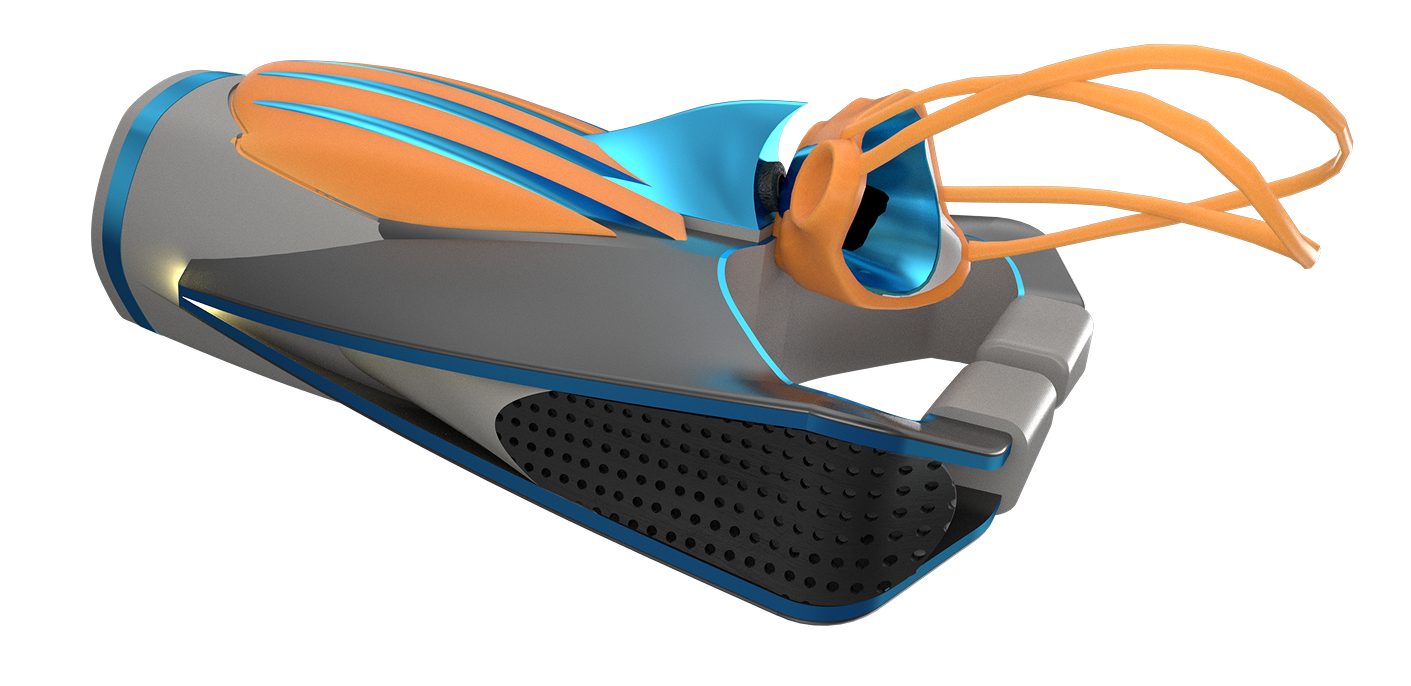
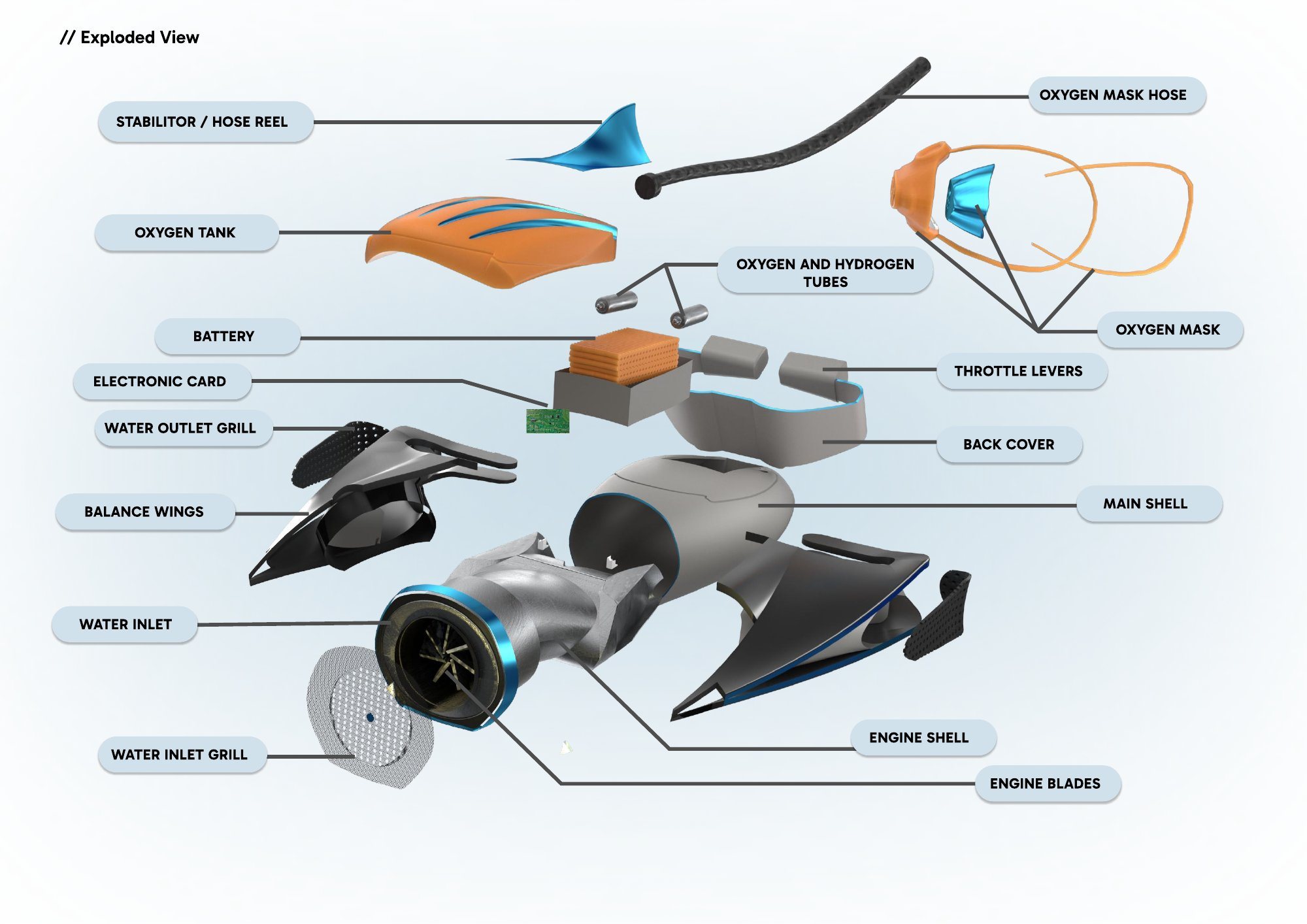
A 1000 W motor, 55 minutes of running time and a maximum depth of 30 m. Oxygen mask support to prevent drowning underwater, a light system that makes the user visible to rescue teams, and a body that can stay on the water surface when needed. It can be carried in a backpack or its own bag.
Ergonomics and Usage Scenario
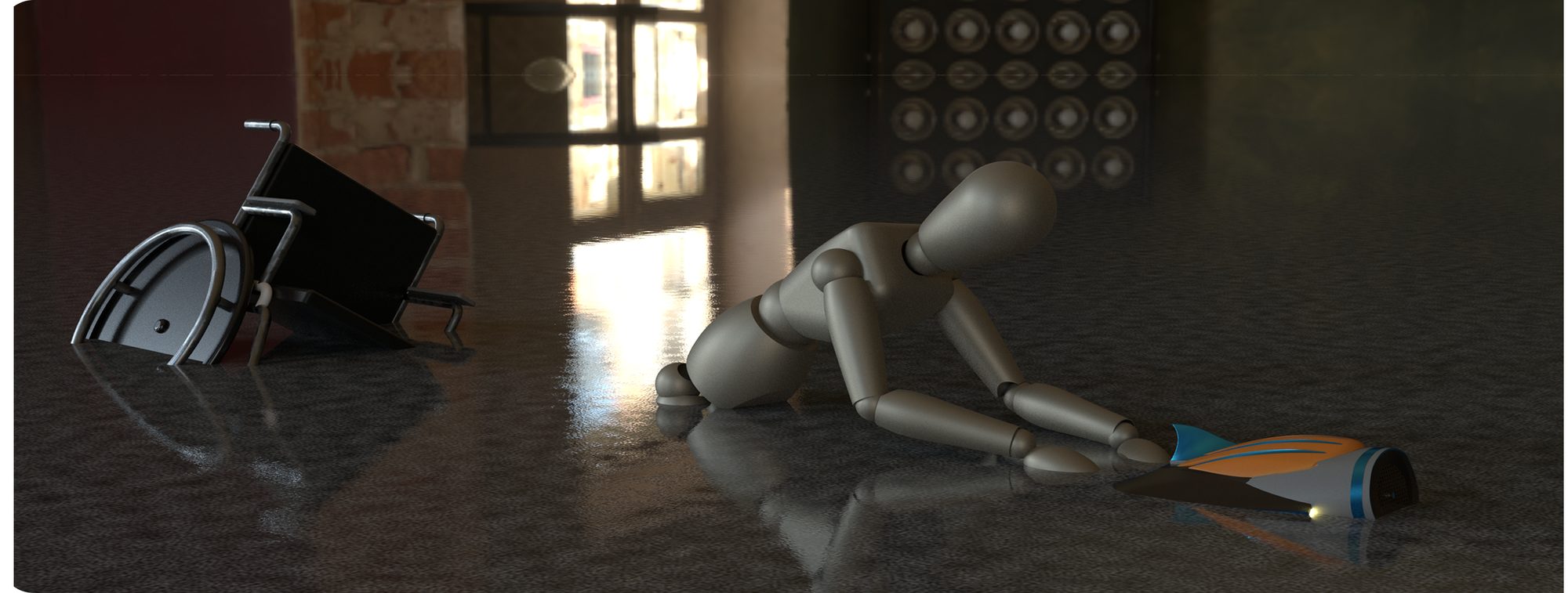
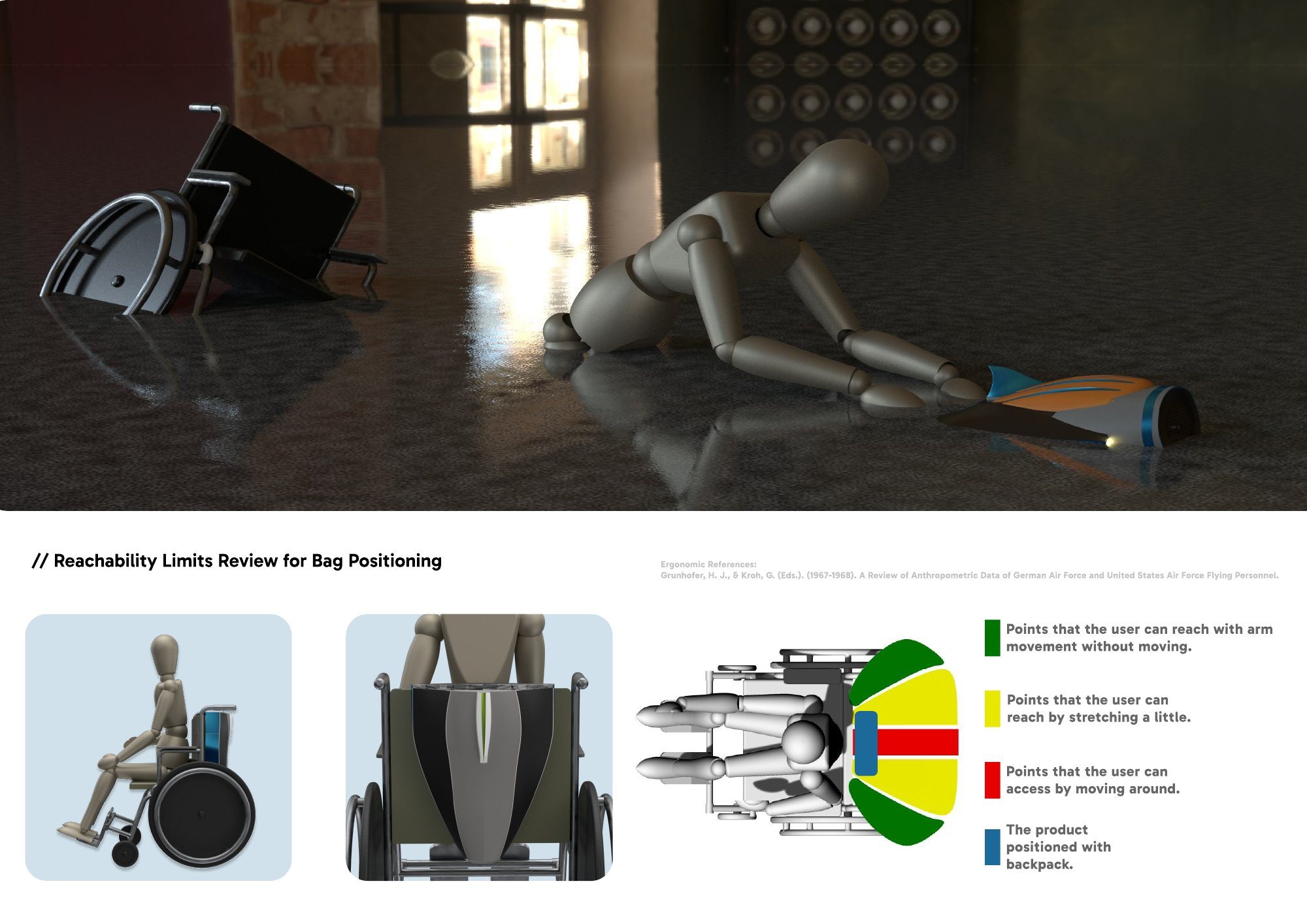
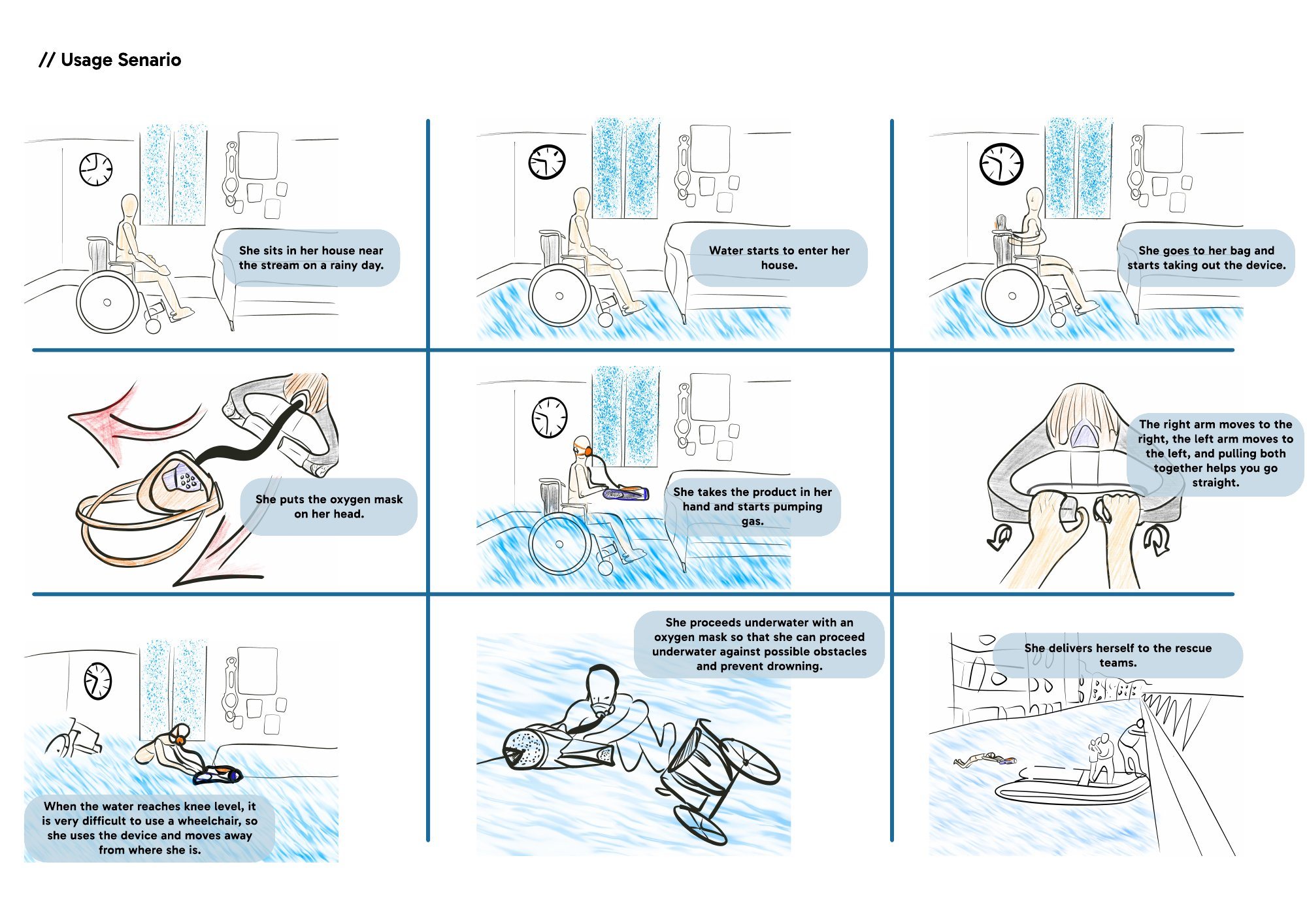
Reach limits were studied with anthropometric data to position the bag. Scenario: when water starts entering the home, the user takes the device from the bag and puts on the oxygen mask; once the water reaches knee level and the wheelchair can no longer be used, the device carries them away to the rescue teams.